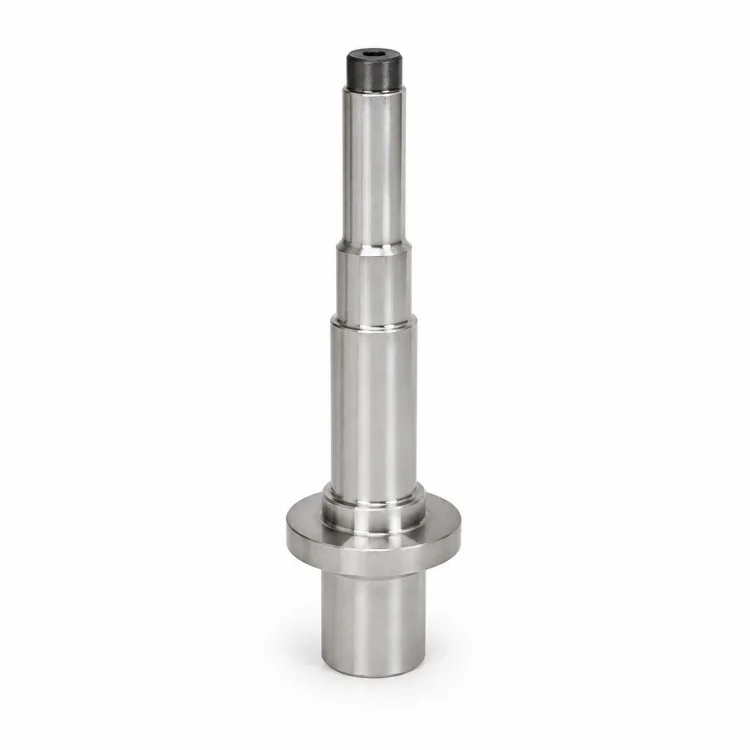
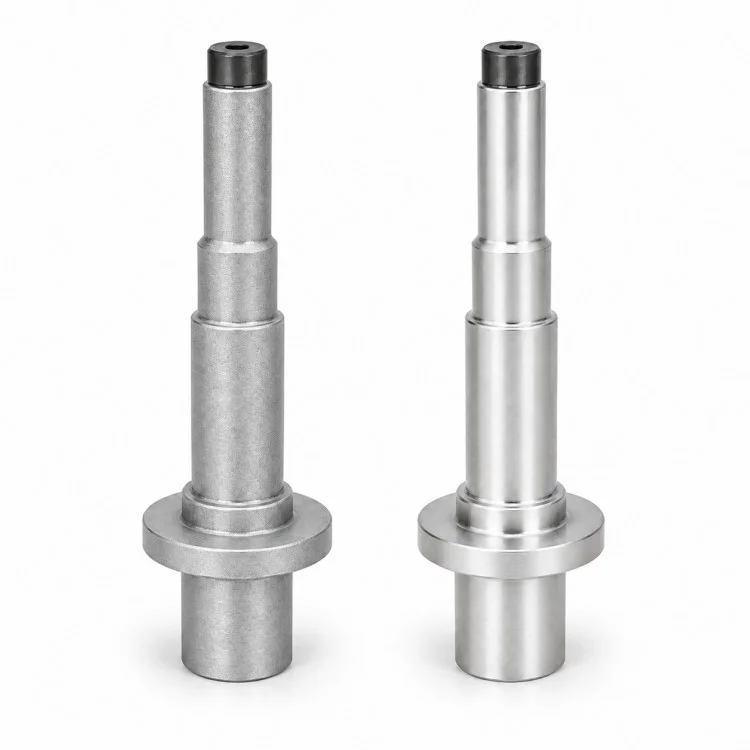
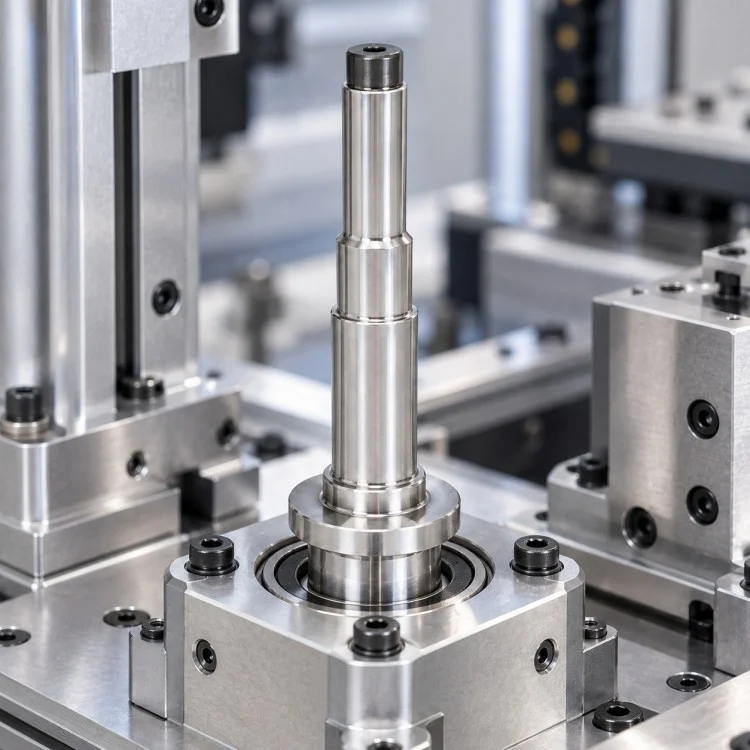
For OEMs, Xiangxing Xin is a Precision CNC Machined Flanged Stepped Shaft manufacturer focused on shafts where several diameters and axial references must function together. Rather than using one continuous cylindrical surface, the component combines multiple journals, transition shoulders and an integral flange so different mating parts can be located at defined positions along the same rotational axis.
The flange is especially important in this structure. It can act as an axial stop, mounting reference or separation point between two assembly zones, depending on the equipment design. Its face position and thickness therefore need to be considered together with the adjacent shaft diameters rather than inspected as an isolated external feature.
Several stepped sections are distributed along the shaft length. These areas may have different fit requirements, meaning one journal could serve as a locating surface while another section only provides clearance or structural support. Final tolerances should consequently follow the real function of each diameter shown on the customer drawing.
Process planning for this type of part normally begins with a stable turning datum. Rough and finish turning are arranged around the journal sequence, shoulder positions and flange faces. Where tighter running fits or surface requirements are specified, selected cylindrical areas may receive additional finishing or grinding after the main turning operations.
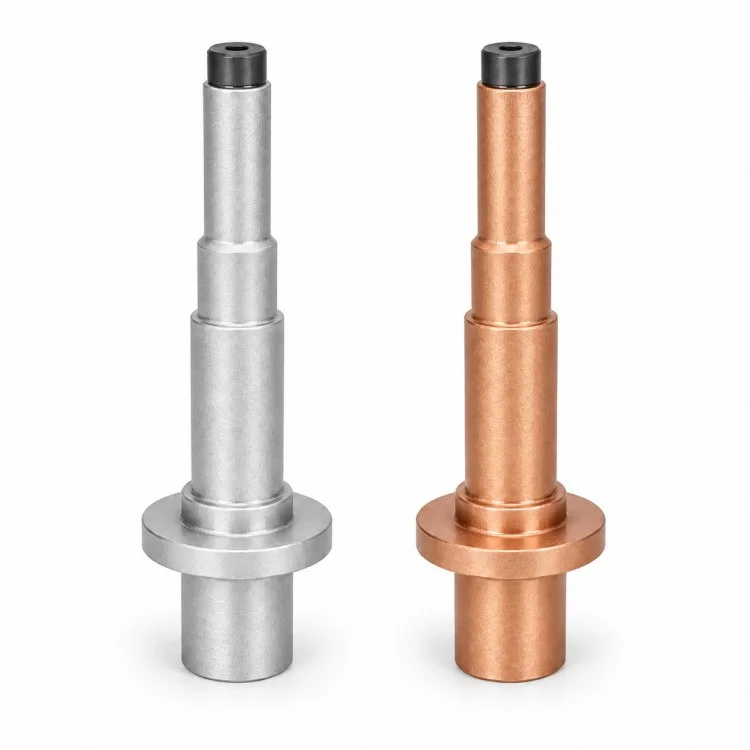
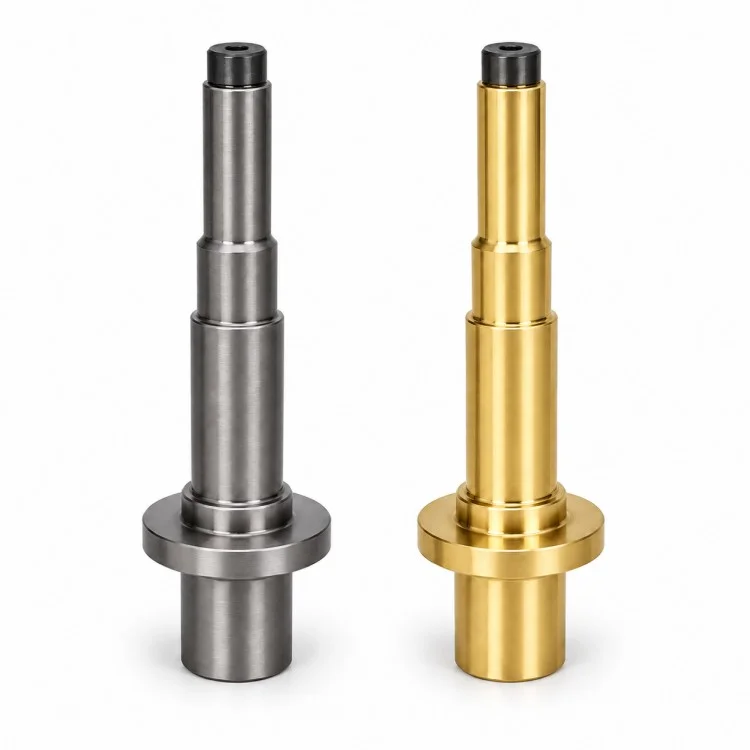
Xiamen Xiangxing Xin Industry and Trade Co., Ltd. can manufacture this type of shaft in appropriate aluminum alloys, stainless steels, carbon/alloy steels, brass and other confirmed machinable materials. Inspection can focus on diameter transitions, axial distances, flange faces, total length and other dimensions that directly influence installation and mechanical alignment.
| Parameter | Details |
| Product Name | Precision CNC Machined Flanged Stepped Shaft |
| Brand | Xiangxing Xin |
| Company | Xiamen Xiangxing Xin Industry and Trade Co., Ltd. |
| Product Type | Flanged Multi-Step Shaft |
| Main Process | CNC Turning / Mill-Turn as Required |
| Shaft Diameters | According to Drawing |
| Journal Lengths | According to Assembly Design |
| Shoulder Positions | According to Customer Specification |
| Flange Diameter | According to Drawing |
| Flange Thickness | According to Axial Location Requirement |
| End Features | Stepped End / Bore / Chamfer as Specified |
| Material | Aluminum, Stainless Steel, Carbon/Alloy Steel, Brass, etc. |
| Tolerance | Assigned According to Functional Area |
| Surface Roughness | According to Technical Drawing |
| Heat Treatment | Available When Specified |
| Surface Treatment | According to Material and Application |
| Production Basis | 2D Drawing / 3D Model / Sample |
| Typical Use | OEM Machinery, Rotary Assemblies, Positioning Systems |
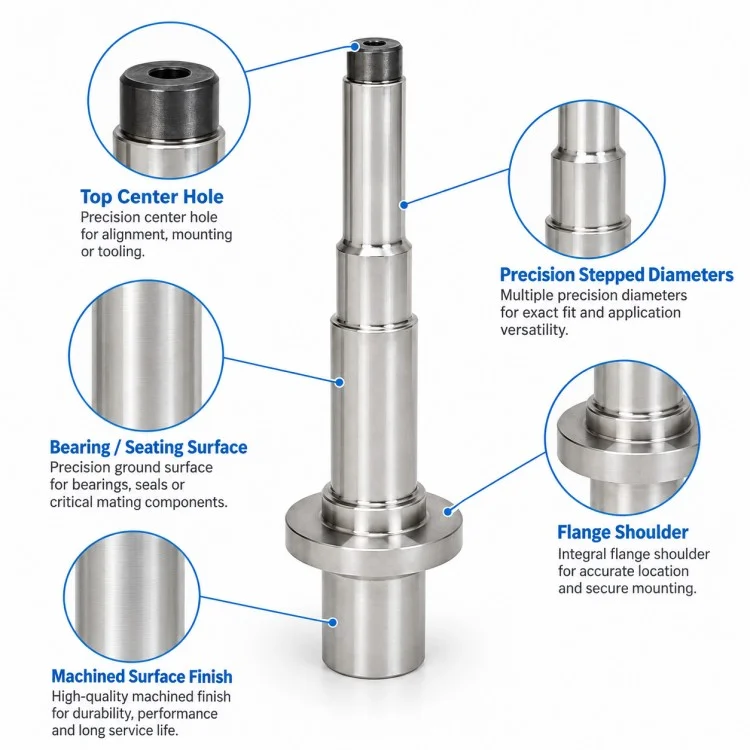
Different sections of the shaft can be assigned different diameters and fit requirements, allowing one component to interface with several mating parts.
The flange creates a positive axial reference without requiring a separate collar in designs where an integrated stop is preferred.
Multiple shoulders separate the functional journals and help establish the installation position of bearings, sleeves or other cylindrical components.
For a Precision CNC Machined Flanged Stepped Shaft, axial distances between shoulders and the flange can be as important as individual diameters because these dimensions determine where mating parts sit after assembly.
Only the surfaces that actually require precision fits need tighter control, while non-critical structural areas can follow appropriate general tolerances.
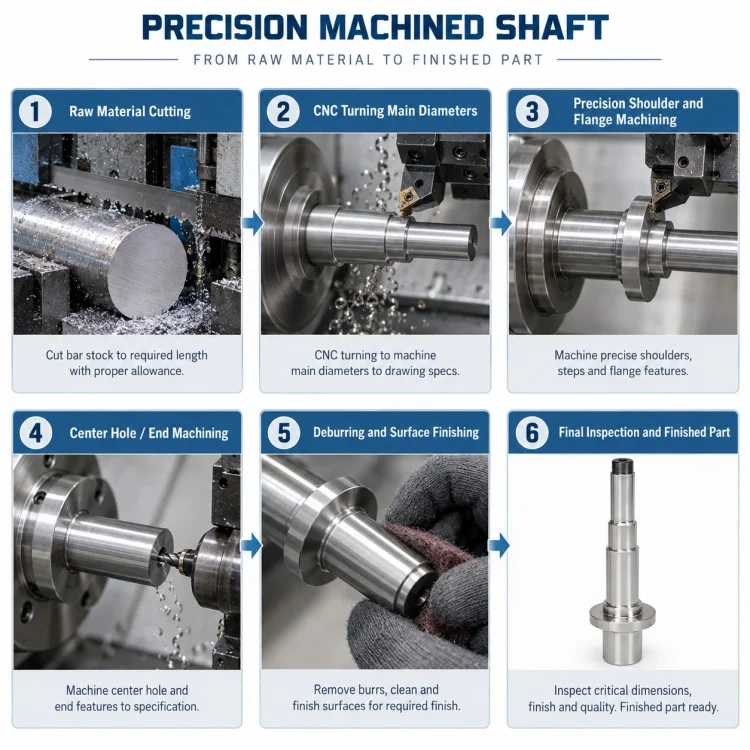
| Process Stage | Main Focus |
| Drawing Review | Classify locating journals, clearance sections, flange faces and critical axial dimensions |
| Material Preparation | Select suitable bar/forged blank and reserve machining allowance |
| Rough Turning | Establish main outside profiles and flange blank |
| Step Turning | Form different shaft diameters and shoulder transitions |
| Flange Machining | Finish flange diameter, thickness and reference faces |
| End Feature Processing | Complete small end diameters, bores or specified end geometry |
| Semi-Finish Inspection | Verify machining allowance on important journals |
| Finish Turning | Complete functional diameters and axial reference surfaces |
| Optional Grinding | Used only on specified precision journals |
| Deburring | Remove burrs around shoulders and transitions |
| Final Measurement | Confirm journal diameter, shoulder distance, flange position and total length |
Yes. Tolerances can be assigned according to the function of each journal rather than applying one tolerance to the whole shaft.
Yes. When the flange determines assembly position, its face location can be treated as a key reference dimension.
Yes, when the drawing requires a fit or surface finish that makes grinding appropriate.
If the customer drawing and material route are suitable, the stepped shaft and flange can be manufactured as one integrated component.
The most useful information includes all shaft diameters, axial lengths, flange dimensions, fit tolerances, surface roughness, material, heat treatment and order quantity.
No. Bearing seats, locating journals and general structural surfaces can have different roughness requirements according to function.
Yes. Prototype quantities can be used to verify key fits and assembly dimensions before repeat production.
For multi-step shaft projects, Xiamen Xiangxing Xin Industry and Trade Co., Ltd. provides Xiangxing Xin direct manufacturing support for Precision CNC Machined Flanged Stepped Shaft from technical review through inspection and repeat production.
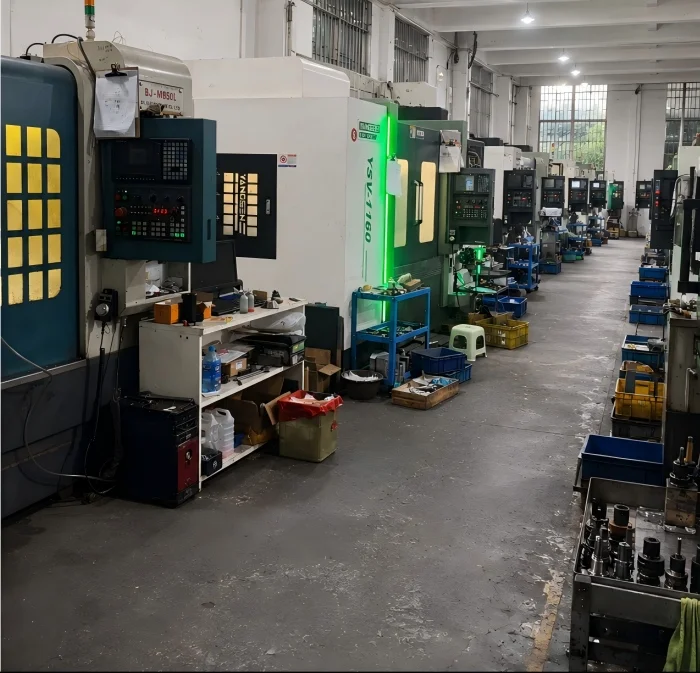
The factory combines CNC turning and turn-mill equipment, allowing shaft-based geometries and additional non-rotational details to be coordinated according to the part design.
Instead of forcing unnecessarily tight tolerances onto the entire component, engineering review can identify true bearing seats, locating journals and axial reference surfaces before machining.
CMM, height measurement, roughness inspection, micrometers and other inspection equipment can be selected according to the actual dimensional requirement.
One-piece prototype orders can be accepted, allowing new shaft designs to be verified before moving into regular production quantities.
When the drawing requires them, heat treatment, surface treatment and related outsourced processes can be coordinated within the manufacturing route.
Once critical dimensions and functional surfaces are confirmed, process and inspection points can be maintained for subsequent production, helping improve repeatability between batches.
Address
No. 168 Tonglian Road, Hugan Village, Xinmin Town, Tongan District, Xiamen
Tel